Is Outsourced Appointment Setting Worth It? Cost, ROI & Benchmarks
Most B2B pipeline problems trace back to prospecting rather than selling — and hiring another rep is a slow, expensive way to fix it.
A fully loaded in-house SDR costs $110K–$160K a year before tools, ramp time, or management overhead. Yet most companies still default to headcount when pipeline stalls. Outsourced appointment setting offers a faster, leaner path: a specialized external team handles ICP targeting, list building, outreach, and meeting booking — your sales team shows up to close.
Here's what this guide covers:
- What outsourced appointment setting actually includes — the full scope, not just cold calling
- How to evaluate providers — the questions that separate real programs from resold automation
- Real ROI benchmarks — documented results across five verticals to show what's possible
P.S. — Key Outreach has run this play across dozens of managed outbound programs. If you'd rather skip the trial-and-error and see what a full team could book for you, book a call and we'll show you.
TL;DR
- Outsourced appointment setting = a third-party team that handles ICP targeting, list building, outreach, and meeting booking end-to-end
- It costs a fraction of a fully loaded in-house SDR ($110K–$160K/yr per rep) and gives you a full team for the price of part of one hire
- Expect first meetings around weeks 5–8, once onboarding and domain warm-up are complete
- Evaluate providers on infrastructure (dedicated domains), data (fresh weekly lists), proof (documented ROI), and contract flexibility
- The strongest verticals: SaaS, marketing agencies, creator platforms, and B2B services with complex sales cycles
What outsourced appointment setting services include
A fully managed program actually covers the entire prospecting-to-booked-meeting process — from infrastructure and data sourcing to multi-channel outreach and calendar confirmation.
Here's what a complete outsourced appointment setting service actually delivers:
- ICP definition and targeting — the provider works with you to define your ideal customer profile by company size, vertical, title, and trigger events, not just a job-title list
- List building and data sourcing — fresh, targeted prospect lists built weekly from tools like LinkedIn Sales Navigator, Apollo, Seamless, and proprietary databases; never static purchased lists that decay the moment you buy them
- Sending infrastructure — dedicated sending domains, inbox warm-up, and deliverability management; outreach never touches your primary domain (one spam complaint on your primary domain and your entire company email reputation is at risk)
- Copywriting and messaging — sequences written, tested, and optimized by the provider based on ICP, vertical, and response data
- Multi-channel execution — email as the primary engine, cold calling as an add-on for higher-intent volume, small-batch LinkedIn for higher tiers
- Inbox monitoring and lead management — real people triaging replies, handling objections, and qualifying interest before a meeting lands on your calendar
- Meeting booking and confirmation — scheduling directly onto your team's calendar with follow-up confirmations to protect show rates
- Reporting and optimization — ongoing performance tracking, A/B testing, and iteration based on what's converting
Key Outreach's fully managed appointment setting program is structured exactly this way — ICP, lists, copy, domains, sending, monitoring, and booked meetings, all handled. Programs run across three tiers: Infrastructure (setup and deliverability), Email (full campaign management and booking), and Email + Calling (maximum volume with multi-channel touchpoints). Pick the tier based on volume and channel needs; the team handles everything else.
In-house vs. outsourced appointment setting — a side-by-side comparison
This is the decision most revenue leaders are actually trying to make. Both paths have real trade-offs, and the right answer depends on your budget, timeline, and how much control you need over the process.
In-house makes sense when you need deep product knowledge on every call and have the budget and management bandwidth to support it. Outsourced makes sense when you need pipeline fast, can't justify the fully loaded cost of an SDR hire, or want to test a new market or ICP before committing headcount.
The hybrid model — outsourcing top-of-funnel prospecting while keeping closers in-house — is the most common setup and often the highest-ROI path. Your team stays on delivery; the outsourced program keeps new meetings flowing.
Key Outreach's model is built for exactly this dynamic. The client gets ICP definition, list building, copywriting, sending infrastructure, inbox monitoring, and meeting booking without adding headcount. Programs start with a six-month initial term, then move to month-to-month with 60-day cancellation notice — structured flexibility that a salaried hire can't offer.
For a deeper look at the benefits of outsourcing your SDR function, the trade-offs are worth understanding before you decide. If you're still mapping the fundamentals, start with the ultimate guide to B2B appointment setting.
How much does outsourced appointment setting cost?
Pricing varies widely depending on the model — per appointment, per hour, or monthly retainer. The structure matters more than the sticker price, because the cheapest option usually delivers the lowest-quality meetings.
Common pricing models:
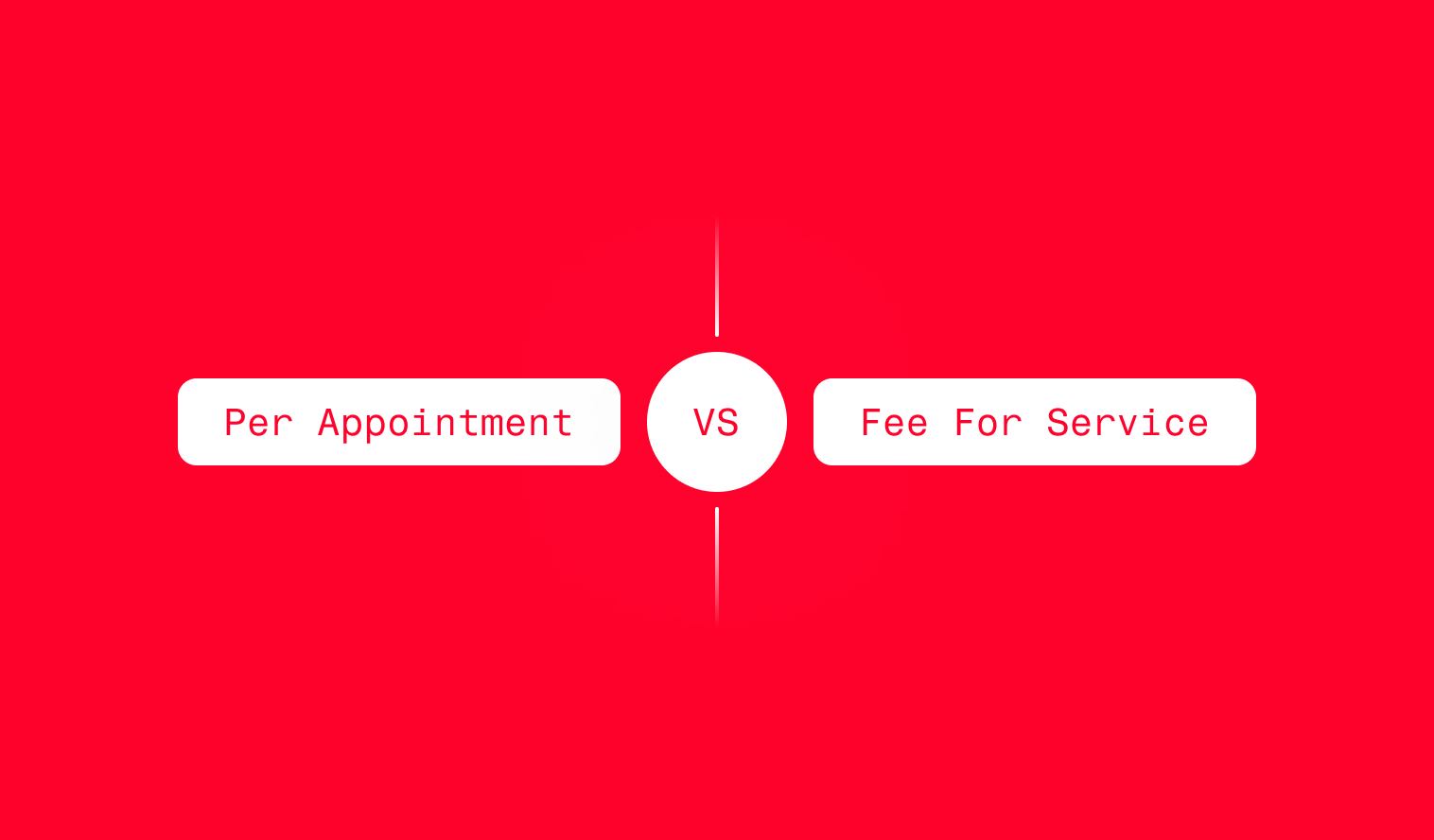
- Per appointment — $150–$500+ per meeting, depending on vertical and seniority of the target; looks affordable until you realize there's no incentive to qualify
- Monthly retainer — $3,000–$15,000+/month depending on volume, channels, and provider; the most common model for fully managed programs
- Per hour / per call — less common for managed programs; more typical for calling-only services
What drives cost up: multi-channel programs (email + calling + LinkedIn), enterprise-level targets, niche verticals, higher volume requirements.
What drives cost down: email-only programs, broader ICP, established providers with existing infrastructure already built.
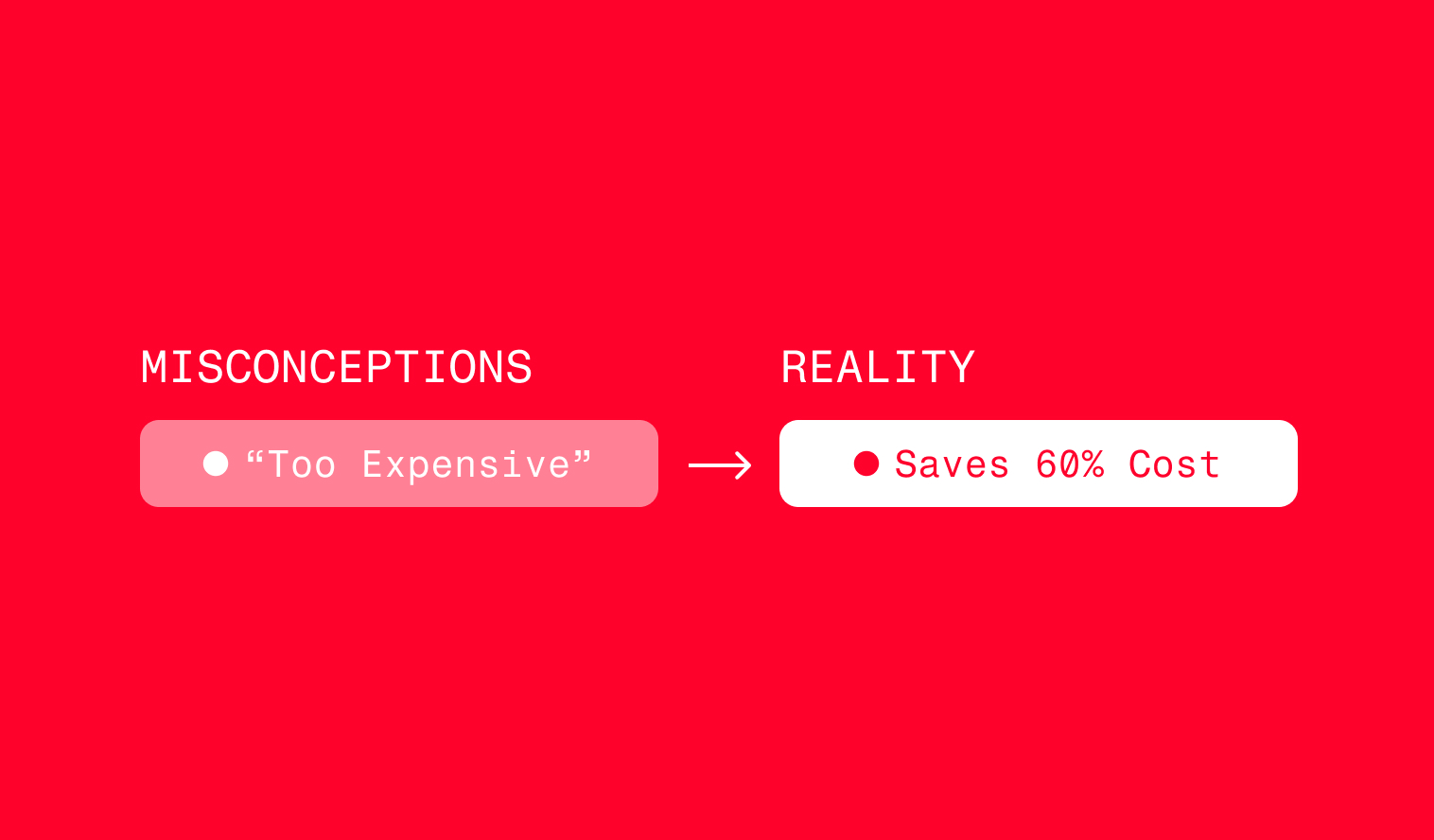
The real comparison is a managed program at $5K–$10K/month versus a single in-house SDR at $9K–$13K/month fully loaded — and the outsourced option bundles in infrastructure, data, copy, and a whole team for that price.
The hidden cost model most articles skip
Most cost comparisons quote a single salary number. Here's the full picture:
Key Outreach structures programs so that one closed deal covers the investment. Ask yourself how many meetings it takes to close one deal, and what that deal is worth. If your average deal is $50K and it takes five meetings to close one, a program that books ten meetings a month pays for itself in the first week of a single close.
And if the program doesn't deliver? Take Key Outreach's guarantee: we'll 10x your pipeline during the pilot, or keep working for free until we do. That kind of risk-reversal is what gives a managed program an edge over a speculative bet on headcount.
How to evaluate an outsourced appointment setting partner
Providers vary widely: some are calling-only shops, others are automation platforms with a thin human layer on top. The right partner runs a repeatable system with real operators, proven deliverability, and documented results.
Before you sign anything, run every candidate through the PIPE framework:
- P — Proof: Do they have documented case studies with real ROI numbers — not just "we booked X meetings," but "X meetings at Y ROI generating $Z in pipeline"? Key Outreach's 33 published case studies with 2x–31x ROI set the benchmark. If a provider can't show you that, keep looking. (For broader context on the category, see what B2B appointment setting companies offer and the tips behind high-booking programs.)
- I — Infrastructure: Do they own the sending infrastructure — dedicated domains, warm-up, deliverability management — or are they using yours? Key Outreach holds the #1 Agency position on SmartLead 2025 (highest reply rates among 5,000+ users). That's a proxy for infrastructure quality, not just send volume.
- P — Process: Is there a defined onboarding-to-launch timeline (weeks 1–3 setup, week 4 launch)? Or do they promise "meetings in 48 hours"? The latter is a red flag — domain warm-up alone takes 2–3 weeks, and any provider skipping it is putting your deliverability at risk.
- E — Economics: Does the math work for your deal size? One closed deal should cover the program cost. If the provider can't walk you through that math for your specific ACV, the fit isn't there.
Questions to ask before signing
- Do you send from dedicated domains, or from my primary domain? (If they use your primary domain, walk away.)
- How do you build prospect lists — static purchased lists or fresh, targeted lists built weekly?
- What channels do you use, and how do you layer them? (Email-first with optional calling and LinkedIn is the most proven structure.)
- Who writes the outreach copy, and how often is it tested and iterated?
- What does your onboarding process look like, and when should I expect the first meetings?
- How do you measure success — opens, replies, or meetings booked? (Meetings booked and ROI are the only metrics that matter.)
- What's your contract structure — long-term lock-in or month-to-month after an initial term?
- Can you show me documented case studies with real ROI numbers?
Red flags to watch for
- Guaranteed lead counts with no qualification criteria
- Sending from your primary domain
- No dedicated sending infrastructure or deliverability management
- Reliance on a single static list instead of fresh weekly builds
- No documented case studies or ROI proof
- Long-term contracts with no performance benchmarks
- Fully automated with no human oversight on replies
When evaluating infrastructure, Key Outreach's #1 SmartLead position reflects the highest reply rates among 5,000+ agency users, which measures deliverability rather than raw send volume. That distinction matters because the best programs win on deliverability, targeting precision, and copy quality rather than blast-and-pray volume.
What the first 90 days look like
One of the biggest mistakes buyers make is expecting meetings in week one. A well-run outsourced appointment setting program has a deliberate ramp, and understanding the timeline prevents you from pulling the plug too early — or accepting a provider that skips critical setup steps.
A few things worth internalizing about this timeline:
- Domain warm-up is non-negotiable. Any provider skipping this step is putting your deliverability at risk. Sending cold volume from a fresh domain without warm-up triggers spam filters — and once you're in the spam folder, you're invisible. For a closer look at how to keep cold emails out of the spam folder, the mechanics matter more than most buyers realize.
- Outbound compounds. Expect meetings to build over time, not spike on day one. The best programs settle into a consistent rhythm by months 2–3 where qualified meetings show up on your calendar every week.
- Build a feedback loop from day one. Which meetings converted? Which ICPs responded best? Feed that back to the provider every two weeks. The faster they can refine targeting and copy based on real conversion data, the faster the program compounds.
Key Outreach's typical timeline mirrors this exactly — onboarding and domain warm-up in weeks 1–3, first emails by week 4, meetings building from there. The deliberate ramp is what sets the program up to last.
Which industries benefit most from outsourced appointment setting?
Outsourced appointment setting works best for B2B companies with complex sales cycles, multiple stakeholders, and deal sizes large enough that one closed opportunity justifies the program cost. Here are the verticals where it delivers the strongest ROI — backed by real results.
- SaaS — Long sales cycles, crowded markets, and over-reliance on inbound make outbound essential. Outsourced appointment setting reaches decision-makers that content marketing alone can't. Key Outreach's work with Tagger — an influencer platform — produced 5,000+ meetings and 3X ROI, growth that supported a $140M acquisition. See SaaS lead generation programs built for this motion.
- Marketing & creative agencies — Growth depends on referrals and networking, which are unpredictable and impossible to scale. A managed outbound program creates a consistent flow of new-business meetings without the founder prospecting. NEWMEDIA.COM generated 65+ meetings at 31X ROI through a managed program. NPRP Media booked 560+ meetings at 10X ROI, generating seven figures in pipeline. Explore lead generation for marketing and creative agencies.
- Creator & influencer platforms — A crowded ecosystem where standing out requires direct outreach to brands, agencies, and marketing teams investing in creator partnerships. Popular Pays booked 300+ meetings at 4X ROI — growth that led to an eight-figure acquisition. See outbound for creator and influencer platforms.
- B2B services — Complex solutions, long decision cycles, and teams too busy serving clients to prospect. Outsourced appointment setting keeps the pipeline moving without pulling anyone off delivery. Remix Logistics booked 100+ meetings at 23X ROI, generating $500K+ in revenue. LPK Brands hit 300+ meetings at 26X ROI with seven figures in pipeline. Explore B2B services lead generation.
The common thread: all four verticals have deal sizes where one closed opportunity covers the program cost — and sales cycles long enough that consistent prospecting is the only way to build a predictable pipeline.
Cross-industry proof: what outsourced appointment setting actually delivers
No generic benchmark can tell you what a managed program will produce for your business. Real case studies across real verticals can. Here's a snapshot of documented results from Key Outreach's 33 published programs:
These results span five different verticals, five different deal sizes, and five different ICPs. The model works broadly because the underlying system — infrastructure, targeting, copy, iteration — is the same regardless of industry.
Common mistakes that kill outsourced appointment setting programs
Most outsourced appointment setting programs that fail don't fail because outbound doesn't work. They fail because of avoidable setup and management mistakes.
- Treating the provider like a vending machine — outsourced doesn't mean uninvolved. The best results come from a feedback loop where you share which meetings converted and which ICPs responded best. Without that signal, the provider is optimizing blind.
- Judging too early — pulling the plug at week 3 because "no meetings yet" ignores the reality of domain warm-up and outbound compounding. Give it 60–90 days before drawing conclusions.
- Skipping ICP definition — "anyone who might buy" is not an ICP. The tighter the targeting, the higher the reply rate and meeting quality. Broad targeting produces volume; narrow targeting produces pipeline.
- Optimizing for opens instead of meetings — open rates are a vanity metric. Meetings booked and pipeline generated are the only numbers that matter. If your provider leads with open rate data, ask why they're not leading with meetings.
- Using your primary domain for outbound — one spam complaint and your entire company email reputation is at risk. Always send from dedicated domains isolated from your primary.
- Buying static lists — data decays fast. Fresh, weekly list building from multiple sources (Sales Navigator, Apollo, Seamless, proprietary databases) is the baseline. A list from six months ago is full of wrong numbers and stale titles.
Ready to build predictable pipeline? Key Outreach can help.
Outsourced appointment setting is the fastest path to predictable B2B pipeline without the cost, ramp time, and management overhead of building an in-house SDR team. The ROI depends entirely on choosing the right partner and giving the program the time and feedback it needs to compound.
Here's what to take away from this guide:
- Outsourced appointment setting covers the full prospecting-to-meeting process — ICP, lists, copy, infrastructure, outreach, and booking. It goes well beyond cold calling.
- The true cost comparison favors outsourcing — a fully loaded in-house SDR runs $110K–$162K+ in year one; a managed program delivers a full team for a fraction of that, with infrastructure and data included.
- Expect first meetings around weeks 5–8 — after a proper onboarding and domain warm-up period. Any provider promising meetings in the first week is skipping steps that matter.
- Evaluate providers on four things: infrastructure (dedicated domains, deliverability), data (fresh weekly lists), proof (documented case studies with ROI), and contract flexibility.
- The strongest verticals: SaaS, agencies, creator platforms, and B2B services with complex sales cycles and deal sizes that justify the program cost.
Key Outreach runs your outbound end-to-end — ICP, lists, copy, sending, and booked meetings — so your team can focus on closing. With 30,000+ meetings booked and $170M+ in revenue influenced since 2015, plus a guarantee to 10x your pipeline during the pilot or keep working for free, it's a managed system built for predictable growth.
Book a call to see how we'd build pipeline for your business.
Frequently asked questions
What is outsourced appointment setting?
Outsourced appointment setting is the practice of handing the entire prospecting-to-booked-meeting process to a specialized external team. The provider handles ICP targeting, list building, outreach copy, sending infrastructure, inbox management, and meeting booking — your sales team focuses on closing. Programs typically run on a monthly retainer and deliver first meetings within 5–8 weeks of onboarding.
How much does outsourced appointment setting cost?
Pricing depends on the model and scope. Monthly retainers typically range from $3,000–$15,000+/month for fully managed programs. Per-appointment pricing runs $150–$500+ per meeting depending on vertical and target seniority. The more useful comparison: a managed program versus a fully loaded in-house SDR at $110K–$162K+ in year one — the outsourced option includes a full team, infrastructure, data, and copy.
How long before I see meetings from an outsourced program?
Expect first meetings around weeks 5–8 after a proper onboarding and domain warm-up period. Weeks 1–3 cover setup (ICP, lists, copy, domain configuration). Week 4 is when first emails go out. Meetings start converting from replies in weeks 5–8 and build from there. Any provider promising meetings in the first week is skipping domain warm-up — a deliverability risk you don't want to take.
What's the difference between outsourced appointment setting and an in-house SDR?
An in-house SDR gives you full control over messaging and daily management — at $110K–$162K+ per year before tools and ramp time. An outsourced program gives you a full team (ICP, lists, copy, infrastructure, sending, booking) on a monthly retainer, with faster time-to-pipeline and no management overhead. The hybrid model — outsourcing top-of-funnel prospecting, keeping closers in-house — is the most common high-ROI setup.
Which industries benefit most from outsourced appointment setting?
The strongest fit: SaaS (long cycles, crowded markets), marketing and creative agencies (referral-dependent growth), creator and influencer platforms (crowded ecosystem requiring direct outreach), and B2B services (complex solutions, teams too busy serving clients to prospect). The common thread is deal sizes large enough that one closed opportunity covers the program cost.