5 Steps Inside the Proven Strategy Driving a 7-Figure Monthly Pipeline

Sales reps spend a surprisingly large share of their week not selling. HubSpot's Sales Trends research puts actual selling time at about two hours a day, well under a third of the workday, with the rest lost to prospecting, admin, and internal back-and-forth. For a high-growth SaaS company where co-founders and reps were all doing their own prospecting, that math was breaking their pipeline.
This article walks through the exact five-step system we used to turn that SaaS company's outbound into a repeatable, 7-figure pipeline engine, and how the same framework applies to any B2B team stuck relying on referrals, inbound, or founder-led selling. Here's what this covers:
- A step-by-step breakdown of the proven strategy behind a real 7-figure monthly pipeline
- The exact targeting and messaging tests that turned cold outreach into booked meetings
- A clear view of what "doubling down" looks like once a sequence starts converting
P.S. We built this exact system for the client below, so if you'd rather skip the trial-and-error, book a call and let's build yours.
TL;DR:
- A SaaS company with founders stuck prospecting instead of closing outsourced its outbound to build a predictable pipeline.
- The winning formula: learn the business like an insider, target the right industries, find true decision-makers, then test and double down on what converts.
- Titles matter more than departments: "social media" outperformed "marketing" for this client's outreach.
- The result: a 7-figure pipeline built month over month, with deals of around $40K annually and support scaled across the USA, Latin America and Canada.
- At Key Outreach, we've booked 30,000+ meetings and influenced $170M+ in revenue since 2015, with case-study ROI ranging 2x to 31x.
The proven strategy behind a 7-figure monthly pipeline
As a high-growth startup, this SaaS company was hitting a familiar wall: co-founders wearing too many hats, and sales reps stuck doing their own prospecting instead of cultivating relationships and closing deals. They wanted to outsource to an experienced SDR team that could fill their sales funnel consistently, not sporadically. That's the problem they brought to us, and it's the same one behind most flat B2B pipelines.
We built a fully-managed outbound program around five repeatable steps. None of them are complicated on their own, but stacked together, they turned this account into a 7-figure-a-month pipeline.
Step 1: Learn the client's business like an insider
Before we set up a single meeting, we get a real understanding of our client's selling points and who the best people to reach out to actually are. We're an outsourced SDR team, but we operate as an extension of the client, not a vendor bolted on from the outside.
That means getting a lay of the land: the competitive landscape, what makes the client different, and the language their buyers actually use. Knowing the product cold lets our team use the right dialogue and buzzwords that land with industry experts instead of sounding like generic cold outreach.
Step 2: Target industries that make sense
Once we understand a client's strengths, we map out which industries are worth targeting. As an outsourced SDR team working across SaaS, agencies, and B2B services, we've learned that where you prospect matters as much as how.
For this SaaS company, both B2C and B2B buyers made sense given how broadly SaaS tools have been adopted across departments. We narrowed in on the industries where we expected this client to have the best shot at securing deals:
- Advertising
- Cosmetics
- Retail
- CPG
- Tech
Identifying the industries where a client's product has the clearest fit lets you qualify prospects instead of just volume-dialing every list you can find. It's the same principle behind any SaaS lead generation program that fills pipeline.
Step 3: Find the actual decision-makers
To keep the team efficient, we aim every touch at decision-makers, not gatekeepers. Reaching the right person directly saves time and resources, and it's the difference between a stalled thread and a booked meeting.
Decision-makers are easier to pinpoint at smaller companies, since people wear multiple roles. At larger companies, the org chart is deeper, so title precision matters more. For this SaaS client, we found that titles containing "social media" consistently outperformed "marketing" titles. For every target company, we mapped every employee in the social media function before sending a single email.
Step 4: Test the message, then double down on what works
We built a multi-step email sequence highlighting the client's value, success stories from similar clients, and relevant accolades, all structured to deliver value simply, not to oversell. In outbound, you have to test to find out what actually works.
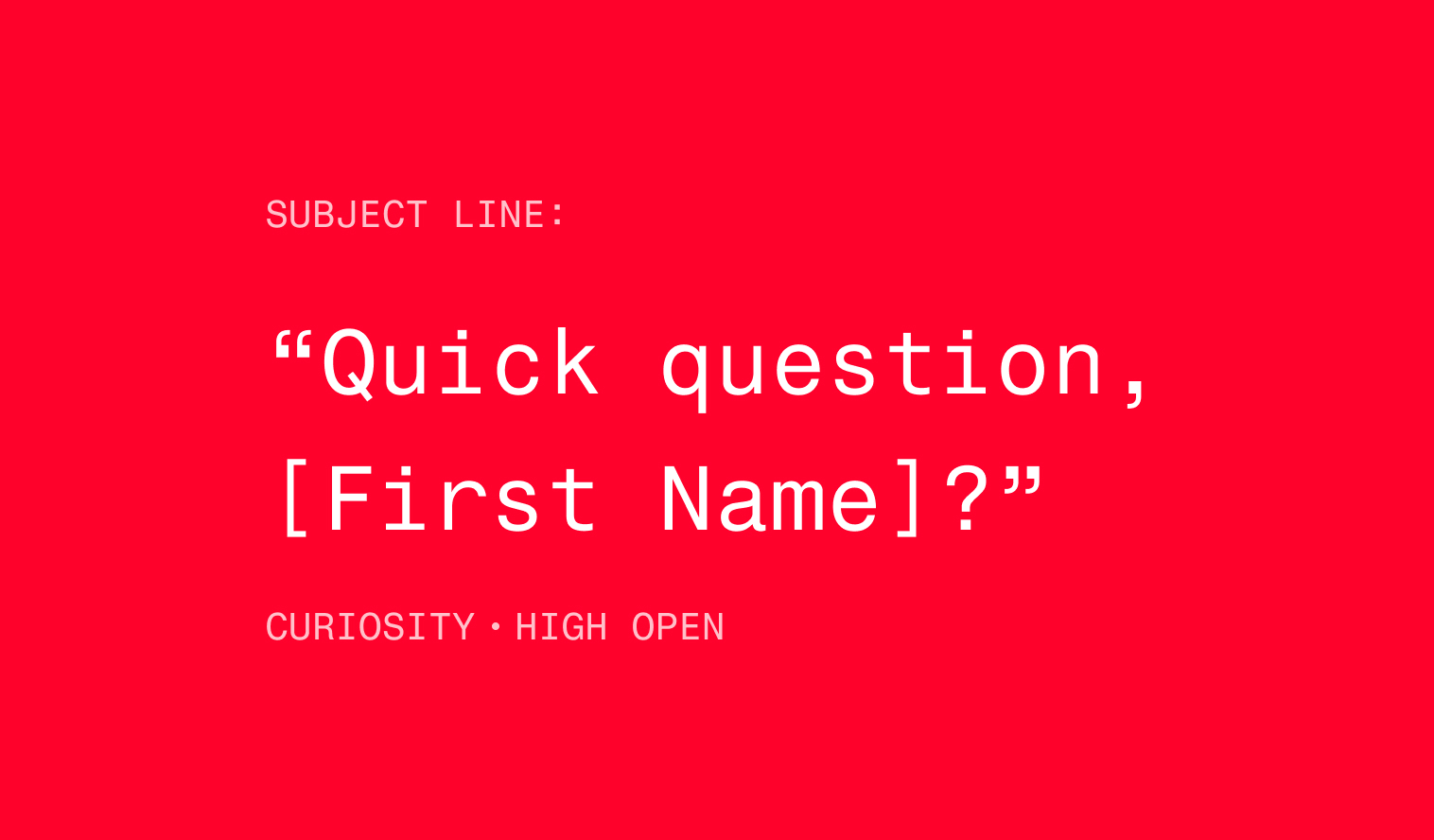
We tested subject lines, pulled proof points from client-provided case studies, and tried multiple angles for communicating value. Using open and close-rate data, we refined the messaging until we had a sequence that consistently converted. Then, because prospecting is a numbers game, we scaled volume behind the winning sequence: more quality prospects in, more quality meetings out. We break down that scaling phase in more detail in our playbook on booking 400 B2B meetings in 30 days.
Step 5: Scale what's working, the results
By identifying decision-makers at the right accounts and engaging them with tested, targeted messaging, this SaaS company's own sales team was freed up to do what they do best: run sales meetings and close deals, instead of chasing prospects. Since launching the program, the client has:
- Built a 7-figure pipeline month over month, with deals of around $40K annually
- Freed the sales team to focus on selling instead of manual prospecting
- Scaled the model to support sales reps across the USA, Latin America, and Canada
Their leadership team credited the shift with freeing their sales organization to focus purely on closing, redirecting internal resources that had been tied up in manual prospecting, and delivering strong ROI on the partnership. That partnership has continued to scale since.
This is one engagement out of many. Across our full client base, we've booked 30,000+ meetings and influenced $170M+ in revenue since 2015, with documented case-study ROI ranging from 2x to 31x. Influencer platform Tagger, for example, booked 5,000+ meetings at a 3x ROI, growth that supported a $140M acquisition.
Why this system works beyond one case study
The five steps above aren't unique to SaaS. They're the same fully-managed process behind every engagement we run: infrastructure, list building, copywriting, sending, and meeting booking, all handled end to end. Clients don't add headcount; they show up to meetings.
Building this in-house typically means hiring a dedicated SDR at $110K–$160K a year before tools, and that gets you one person, not a full team running email infrastructure, list sourcing, cold calling, and testing at the same time. Most programs are structured so that one closed deal covers the investment. Every pilot runs under a simple guarantee: we'll 10x your pipeline during the pilot, or keep working for free until we do.
Build predictable pipeline with Key Outreach
A 7-figure monthly pipeline doesn't happen by luck. It comes from a repeatable system built on insider knowledge, tight targeting, real decision-makers, and disciplined testing. Build that system once, and it keeps paying off. Want to see what this could look like for your business? Book a call and we'll map out the plan.
Key takeaways
- The strategy behind a 7-figure monthly pipeline starts with knowing the client's business well enough to sound like an insider, not a vendor.
- Targeting the right industries and the right decision-maker titles matters more than raw outreach volume. Precision beats spray-and-pray.
- Testing subject lines, sequences, and messaging before scaling volume turns a decent cadence into one that consistently converts.
- A fully-managed outbound system replaces the cost and limits of a single in-house SDR hire with a full team built for predictable pipeline.
P.S. If your sales team is still doing its own prospecting instead of closing, it might be worth booking a call to see what a fully-managed outbound program could look like for you.
Frequently asked questions
How long does it take to see results from an outsourced SDR program?
Most programs follow a predictable timeline: weeks 1–3 for onboarding and domain warm-up, first emails going out in week 4, and meetings building steadily after that. Full pipeline impact, like the 7-figure monthly pipeline seen here, typically builds over several months.
What's the difference between lead generation and appointment setting?
Lead generation and appointment setting cover different parts of the same process. Lead generation is the full cycle of finding and qualifying prospects, while appointment setting is the final step of actually booking the meeting on a buyer's calendar. A fully-managed outbound program typically handles both under one system rather than treating them separately.
How much does outsourced B2B lead generation cost compared to hiring in-house?
A fully loaded in-house SDR runs $110K–$160K a year before tools, and that's for one person. Outsourced programs are structured as a tiered monthly retainer covering a full team, including infrastructure, sourcing, outreach, and booking, often positioned so one closed deal covers the cost.
Which decision-maker titles should I target for outbound outreach?
It depends on the buyer, not just the department name. In this SaaS case, titles containing "social media" consistently outperformed "marketing" titles. That points to a broader rule: map actual job functions per target account rather than assuming a department label predicts the right contact.
Can outbound email really produce a 7-figure pipeline on its own?
Yes, when it's built on tested messaging, precise targeting, and consistent volume behind what's working. Email remains the primary channel in most B2B outbound systems, with cold calling and limited LinkedIn outreach layered in for higher-volume programs.