Pay Per Appointment B2B Appointment Setting: Worth It?
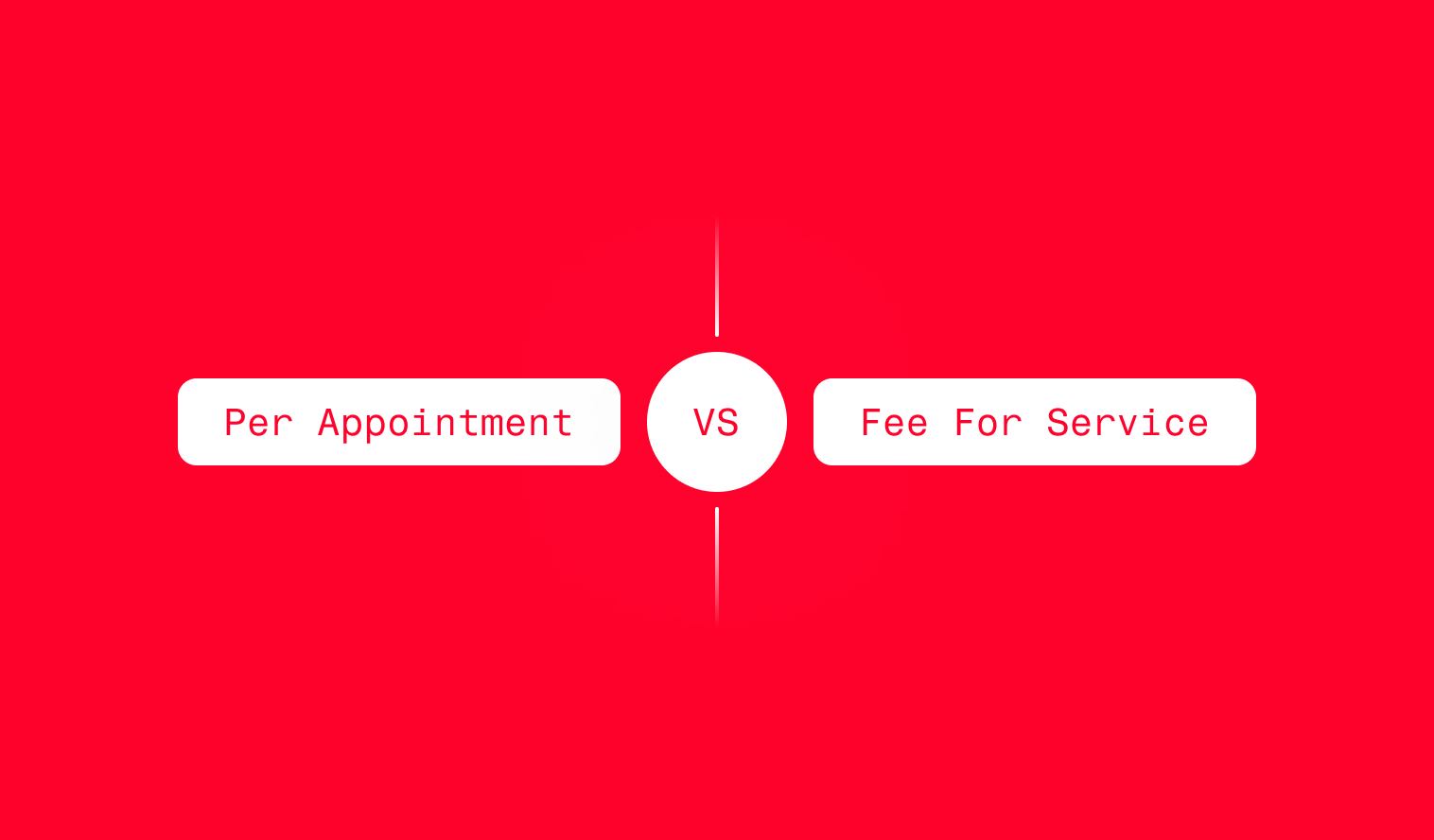
Pay-per-appointment B2B appointment setting is exactly what it sounds like: a provider prospects on your behalf and you pay a fixed fee — typically $150–$600 per meeting for mainstream ICPs, $600–$900+ for enterprise segments — only when a qualified meeting lands on your calendar. No retainer, no hourly rate. No meetings, no charge.
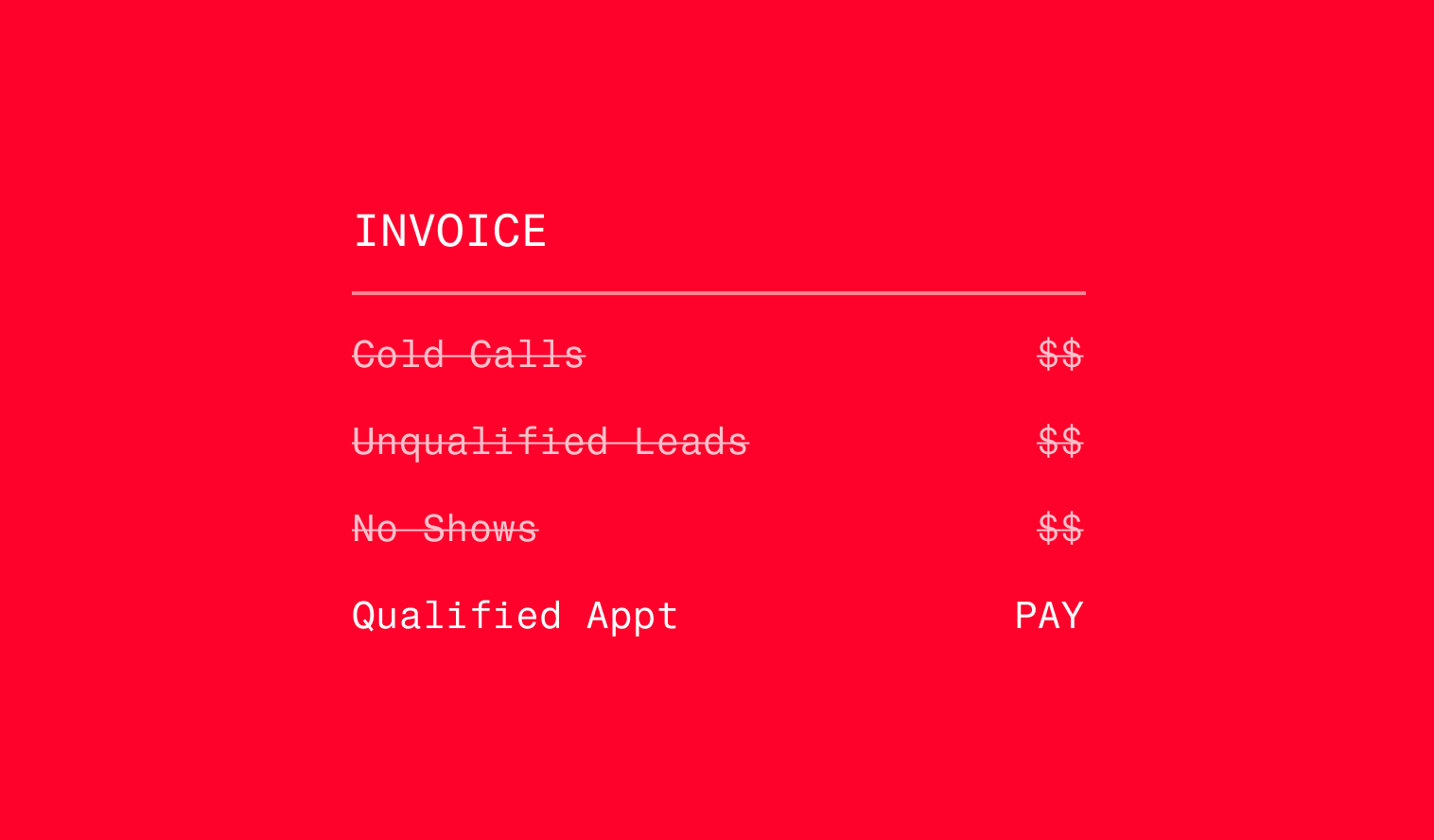
The appeal is obvious. But the model has a catch: when a provider gets paid per booking, their incentive is volume, not quality. That misalignment can quietly cost you more than a retainer would — in wasted AE time, burned deliverability, and a pipeline full of meetings that never convert. The pricing model matters less than the system producing the meetings.
Here’s what this guide covers:
- How pay-per-appointment works and how it compares to retainer and in-house models
- The real cost breakdown — per-meeting fees, hidden costs, and unit economics most buyers never run
- When PPA makes sense and when a managed retainer outperforms it
P.S. We’ve run managed outbound programs across SaaS, agencies, creator platforms, and B2B services. If you’d rather skip the model comparison and see what a full team could book for you, book a call with Key Outreach.
TL;DR
- Pay per appointment charges a fixed fee per booked meeting — fast to start, but no infrastructure investment and misaligned incentives on quality.
- Per-meeting fees range from $150–$600+, but the real cost includes show rate, opportunity conversion, and what you’re not getting (dedicated domains, optimized copy, fresh lists).
- A managed retainer builds a compounding system — cost per meeting drops over time as domains warm, copy improves, and lists sharpen.
- PPA works best for short-term tests or seasonal pushes; retainer wins for repeatable, scalable pipeline.
- The qualification definition — ICP fit, title, company size, expressed interest — is the single most important variable in any PPA agreement.
What is pay-per-appointment B2B appointment setting?
In a pay-per-appointment model, the provider handles all outbound prospecting — list building, messaging, outreach — and you pay a fixed fee for each qualified meeting they book on your calendar. No monthly retainer, no hourly billing. You pay per output.
That’s where it differs from pay-per-lead (you get a name and contact, not a booked conversation) and from retainer-based managed outbound (you pay monthly for the full system, not per unit). PPA sits in the middle: more accountable than pay-per-lead, less infrastructure-heavy than a managed program.
The channels vary by provider — cold calling, email, LinkedIn, or a combination. But the core logic is the same across all of them: the provider absorbs the prospecting effort and you absorb the meeting.
Who typically uses PPA?
- Early-stage companies testing outbound for the first time
- Teams validating a new ICP or market before committing to a full system
- Businesses with a short-term need — a conference push, a seasonal window — where a retainer doesn’t pencil out
The critical variable in any PPA agreement isn’t the price per meeting, but how “qualified” is defined. ICP fit, job title, company size, geography, and a clear expression of interest from the prospect — all of this should be in writing before you sign anything. Vague qualification standards are how providers hit their booking targets while you sit through meetings that go nowhere.
For a closer look at how the B2B appointment setting process works end-to-end — from ICP definition through booked meeting — that guide covers the full system.
How much does pay-per-appointment cost?
The per-meeting fee is the number everyone quotes. It’s also the least useful number in isolation. The real cost of a PPA program includes setup fees, minimum commitments, and the downstream cost of meetings that don’t convert — because show rate and opportunity conversion rate are what actually determine your cost per pipeline dollar.
Here’s how the cost components typically break down:
For comparison: a fully loaded in-house SDR in the US typically runs $9,800–$14,200/month before tools and management overhead. At 10–14 meetings per month — the standard benchmark for a single outbound rep — that’s $700–$1,150 per meeting. PPA’s headline rate looks cheaper. But that comparison only holds if the meetings are equivalent in quality and the show rate is strong.
A retainer-based managed program changes the math differently. The monthly fee covers the entire outbound engine — ICP definition, list building, copywriting, dedicated sending domains, inbox monitoring, and meeting booking. In month one, the cost per meeting may be similar to PPA. By month four or five, after domains are warm and copy is optimized, cost per meeting drops while PPA stays flat (or rises if the provider raises rates).
If you’re running the math on cost per meeting, think about what’s behind the number. Key Outreach’s managed program runs on a monthly retainer — covering the full outbound system across three tiers (Infrastructure, Email, and Email + Calling) — rather than charging per unit. Most programs are structured so that one closed deal covers the investment. For a full breakdown of how B2B appointment setting costs compare across models, that post runs the numbers in detail.
Pay per appointment vs. retainer vs. in-house — side by side
The pricing model is really a proxy for something more fundamental: how much control, quality, and infrastructure you’re getting. A per-meeting fee tells you what you’ll pay for a booking. It tells you nothing about the deliverability setup, the targeting logic, or the messaging that produced it.
Here’s how the three models compare across the factors that actually determine pipeline quality:
The real risks of pay-per-appointment models
PPA sounds low-risk because you only pay for results. But the incentive structure creates problems that often cost more than a retainer would — not in upfront fees, but in wasted AE time, burned sender reputation, and a pipeline that looks busy but doesn’t close.
Volume over quality
When a provider earns per booking, their incentive is to book. That can mean loose qualification — prospects who match the ICP on paper but have no real interest, or meetings booked under misleading pretenses just to hit the number.
Protect yourself by defining “qualified” in writing before signing: ICP, title, company size, geography, and a clear expression of interest from the prospect. Also ask for a no-show and cancellation policy in the contract. If the provider charges for no-shows, that’s a red flag; it means they’re not accountable for booking quality.
No infrastructure investment
PPA providers rarely build dedicated sending domains or warm infrastructure for your brand. They typically send from shared or rotating infrastructure, which means your deliverability and sender reputation are out of your hands.
If the provider burns a domain or gets flagged as spam, your brand takes the hit even though you never controlled the setup. Before signing, ask: “Are you sending from dedicated domains? Who owns them? What happens to deliverability data when the engagement ends?” Vague answers are your signal.
Misaligned incentives on messaging
When the provider is paid per meeting, they’re motivated to use whatever messaging gets the booking — including aggressive or misleading subject lines and openers. That first impression is your brand, not theirs.
Ask to approve all messaging before it goes out. Request access to reply data so you can see how prospects are actually responding. If a provider won’t share reply data, they’re hiding something.
No compounding value
With PPA, you’re buying individual meetings. With a managed system, you’re building an outbound engine that compounds: domains warm up, copy gets optimized, lists get refined, and cost per meeting drops over time. Stop paying for PPA, and the pipeline stops. Stop a managed retainer and the infrastructure, data, and learnings stay with you.
The hidden cost of pay-per-appointment — a unit-economics breakdown
Most guides quote the $150–$600 range and stop there. That number is almost meaningless without the downstream math. Here’s how to run it yourself.
Start with a simple model. You’re paying $300 per appointment. Here’s what that actually costs you in pipeline:
The PPA column looks clean in month one. But two things happen over time that change the math.
First, show rate degrades. PPA providers using shared or burned infrastructure see reply rates drop within weeks. To hit their booking targets, they either lower qualification standards or book meetings with less-interested prospects — both of which hurt your show rate and opportunity conversion.
Second, the retainer compounds. In month one, a managed program’s cost per meeting may match PPA. By month four or five, after domains are warm, copy is tested, and lists are refined, the same retainer produces more meetings at a lower cost per meeting. PPA stays flat.
That compounding effect drove results like Remix Logistics’ 100+ meetings at a 23x ROI and $500K+ in revenue — unit economics no pay-per-appointment model could replicate, because the value came from a system that improved month after month, not a per-unit transaction.
When pay per appointment actually makes sense
PPA isn’t always the wrong choice. Specific scenarios make it a reasonable starting point. PPA makes sense when:
- You’re testing a brand-new ICP or market and want to validate demand before committing to a full outbound system. PPA lets you run a fast experiment without a six-month commitment.
- You have a short-term, defined need — filling a conference calendar, a seasonal push, or a one-time campaign window where a retainer doesn’t pencil out.
- Your ACV is low enough that a retainer doesn’t make financial sense, but high enough that $150–$600 per meeting still delivers a clear ROI on closed deals.
- You have internal capacity to absorb and follow up on meetings quickly. PPA providers rarely nurture no-shows or reschedules — if your team can’t move fast, those meetings evaporate.
If any of these conditions apply, PPA is a defensible choice. Define “qualified” in writing, ask about deliverability infrastructure, and include the no-show policy in the contract before you start.
When a managed retainer is the better fit
For most B2B companies with a real growth target and a product or service worth $10K+ ACV, a managed retainer outperforms PPA on quality, cost per meeting over time, and pipeline predictability. The question isn’t whether PPA is bad — it’s whether you’re buying a transaction or building a system.
A managed retainer is the right fit when:
- You need a repeatable, compounding outbound engine — not one-off meetings that stop when you stop paying per unit.
- You want dedicated infrastructure — domains, deliverability, and fresh weekly lists built specifically for your brand and ICP.
- You want messaging control and collaborative iteration — copy you’ve approved, reply data you can see, and ongoing optimization based on what’s working.
- You’re comparing the cost of an in-house SDR ($110K–$160K/yr before tools) and want equivalent output without adding headcount or management overhead.
This is the model behind Cohley’s 550+ meetings at 3x ROI (a content/UGC platform) and Tagger’s 5,000+ meetings at 3x ROI — growth that supported a $140M acquisition. The difference wasn’t a per-meeting fee. It was a fully managed outbound program running dedicated email infrastructure, fresh weekly lists, and ongoing copy optimization month after month.
How to evaluate any appointment setting provider
Regardless of pricing model, these are the questions that separate a provider who builds pipeline from one who burns your brand. Run through this checklist before signing anything — and if a provider can’t answer clearly, that’s your answer.
- Qualification criteria: Is “qualified” defined in writing? Who decides if a meeting counts — you or the provider?
- Infrastructure: Are they sending from dedicated domains or shared infrastructure? Who owns the domains when the engagement ends?
- Data sourcing: Are lists built fresh weekly, or are they pulling from a static database? How often are lists refreshed?
- Messaging: Do you approve copy before it sends? Can you see reply data — not just meeting counts?
- Channels: Email-only, cold calling, LinkedIn, or multi-channel? What’s the primary engine, and why?
- Reporting: What metrics do you actually see? Meetings booked, reply rates, show rates, pipeline influenced?
- Contract terms: What’s the minimum commitment? What’s the cancellation policy? What happens if results don’t hit the target?
- Proof: Can they show documented ROI from companies in your vertical — not just meeting counts, but pipeline and revenue outcomes?
On that last point: for real examples, see our case studies with documented ROI ranging from 2x to 31x — including results across SaaS, agencies, creator platforms, and B2B services. That kind of transparency is the baseline you should expect from any provider, regardless of pricing.
Ready for predictable pipeline? Key Outreach can help.
The pricing model is a starting point, not the answer. Whether PPA makes sense depends on your timeline, ACV, and whether you need a one-time test or a compounding outbound engine. For most B2B teams with a real growth target, the math favors a managed system — one that builds infrastructure, refines copy, and gets cheaper per meeting over time.
Here’s what to take away from this guide:
- Define “qualified” in writing before any PPA agreement — ICP, title, company size, and expressed interest. Without it, you’re paying for volume, not pipeline.
- Run the unit economics, not just the per-meeting fee — show rate, opportunity conversion, and cost per opportunity tell the real story.
- Ask about deliverability infrastructure — dedicated domains, warm-up periods, and inbox monitoring are what separate programs that compound from ones that flame out.
- Match the model to the goal — PPA for short-term validation, managed retainer for repeatable, scalable pipeline.
Key Outreach runs your outbound end-to-end — ICP, lists, copy, dedicated sending domains, inbox monitoring, and booked meetings — on a monthly retainer that costs a fraction of an in-house SDR. Across 33 documented programs, we’ve driven 2X–31X ROI and booked 30,000+ meetings since 2015. If you’re ready to see what a managed program could book for you, Key Outreach makes it simple. Book a call to get started.
Frequently asked questions
What’s a reasonable cost per appointment in B2B?
$150–$600 for mainstream ICPs; $600–$900+ for enterprise or hard-to-reach segments. But the number means nothing without knowing the qualification standard and show rate behind it. A $200 meeting with a 50% show rate is more expensive than a $400 meeting with an 85% show rate.
Is pay per appointment better than a retainer?
It depends on your goal. PPA caps upfront risk and starts faster. A retainer builds a system that gets better — and cheaper per meeting — over time. If you need to validate a market quickly, PPA is defensible. If you need repeatable pipeline, the retainer wins.
What’s the average show rate for PPA meetings?
Industry benchmarks vary widely (60–85%), and providers define “show” differently — some count a booked meeting, others count a sat meeting. Always clarify whether you’re paying for booked or sat meetings before you sign.
Can I do pay-per-appointment with cold email?
Yes, but email-first PPA requires real infrastructure — dedicated domains, warm-up periods, deliverability monitoring. If the provider skips this setup, reply rates crater within weeks, and your meeting volume follows.
How many meetings should I expect per month?
A single outbound SDR typically generates 10–14 meetings per month. Managed programs can scale beyond that by layering channels — email as the engine, cold calling for higher-intent accounts — and optimizing over time.